
By Marino Demonte of Skyward Specialty and Carol Levine of Arthur B. Levine Co., Inc.
In March 2023, the United States experienced a banking crisis that saw four banks go under. The bank failures created considerable angst and upheaval in the surety industry. Prior to this, federal funds rates hovered close to 0%, causing some banks to invest their reserves largely in long-term, low-interest U.S. Treasuries. As the Federal Reserve began a rapid rise in interest rates against which the banks did not adequately hedge, the market value of these portfolios dropped significantly, creating large unrealized or paper losses. This was further compounded for portfolios holding these securities as Held-to-Maturity and not Available-for-Sale, as they were now obliged to show the losses on their balance sheets as they were forced to sell them to secure the liquidity needed for the bank’s operations. This led to a severe liquidity crisis, causing panic among largely uninsured depositors to withdraw funds. This forced banks like Silicon Valley Bank to realize large losses and put unanticipated pressure on bank High-Quality Liquid Asset (HQLA) portfolios, leaving them with limited options to improve liquidity. As a result, sureties reacted to the sudden risk by either withdrawing entirely from the depository bond market or significantly reducing their underwriting appetite for this class of business.
Bank Depository Bonds and Why They Matter
 Bank depository bonds are financial guarantees used to protect depositors whose account balances exceed the standard FDIC insurance limit of $250,000. The bond functions by ensuring that any uninsured portion of deposited funds is backed by a surety, providing recovery if a bank fails to safeguard those deposits.
Depository bonds can be used to safeguard several types of deposits, some of which require collateralization and others in which depositors choose to collateralize deposits for added security. For example, the bonds may cover deposits under regulatory requirements for bankruptcy funds, 1039 Exchange funds to defer capital gains tax from real estate sales, Homeowners Associations (HOAs), courts and municipalities, as well as upon request by private depositors.
For purposes of this article, we will focus on bankruptcy estate funds. Under Section 11 U.S.C. §345 of the bankruptcy code, monies involved in a bankruptcy matter must be held in approved, FDIC‑insured depositories. To ensure the safety of estate funds, when deposits in these banks exceed FDIC limits, government securities must be pledged as collateral. This includes U.S. Treasury bills (T-bills), notes or bonds, or by using surety bonds issued by approved corporate sureties. These requirements are intended to safeguard bankruptcy estate funds and ensure their protection throughout the administration of the case.
Surety bonds historically played a central role for the following reasons: they enable deposits to remain off balance sheet, free up credit capacity rather than being immobilized as pledged collateral, provide flexibility that T-bills and other securities cannot, and simplify administrative oversight for banks and U.S. Trustees. As a result, surety bonds have been the preferred method of collateralization given the significant advantages over other forms of approved collateral.
How Surety was Affected by the Banking Crisis
The 2023 banking crisis was marked by the rapid failures of Silicon Valley Bank (SVB), Silvergate Bank, Signature Bank, and then First Republic Bank, which exposed systemic vulnerabilities that had been accruing beneath the surface of the U.S. financial system. The crisis highlighted structural issues such as interest-rate sensitivity, supervisory gaps, and the accelerating impact of digital bank runs. When SVB crashed, it created a ripple effect, and the associated panic from it demonstrated that social media-driven withdrawals can occur at unprecedented speed and scale. SVB lost $42 billion in deposits in a single day, with another $100 billion set to leave the next morning—nearly 80% of deposits in under 48 hours. The impact of digital banking intensified depositor herding behavior far more quickly than in previous crises. Multiple reports showed that supervisory bodies identified weaknesses at SVB but did not act fast enough: regulators failed to downgrade SVB’s CAMELS ratings, reacting late despite clear signals of interest‑rate risk, governance failures, and concentration risk. Governance failures, such as a lack of risk leadership, had systemic consequences. Sector concentration and uninsured deposits dramatically magnified liquidity crises, as did inadequate testing of quick access to Federal Home Loan Bank (FHLB) funds. Additionally, SVB had already bulked up on its FHLB advances just prior to the crisis, with a 50% leverage that further exacerbated its circumstances.
At the time of the crisis, the surety industry had well over a billion dollars in outstanding bank depository bonds on these banks alone, not to mention other types of surety product risks provided to them. This does not even consider all the other banks on which the sureties were holding risks. Consequently, without knowing how this crisis would end, the reaction within the surety and reinsurance markets was swift.
The Surety Marketplace Response
Sureties and their reinsurers reacted sharply to emerging risks in the banking sector, creating significant strain on bank depository bond programs. Many surety providers began applying cancellation pressure on existing depository bonds, reassessing their exposure and reducing commitments as uncertainty set in. At the same time, treaty restrictions prompted sureties to withdraw from this class of business altogether as reinsurers imposed stricter terms and added depository bonds as treaty exclusions. Alternatively, some surety carriers remained on pause, not issuing riders or adding any new bonds. What capacity remained had become increasingly selective, with sureties focusing almost exclusively on “Too Big to Fail” financial institutions or specific types of deposits. This meant smaller and mid‑sized regional banks were left with limited surety options, facing shrinking availability and higher barriers to securing the collateral support they needed. Fortunately, some sureties that were not affected by reinsurance restrictions continued doing business without interruption.
Lessons Learned
Three years later, surety issuers have drawn clear lessons from 2023: to better anticipate risks and underwrite more effectively. The industry realized and acknowledged a rate inadequacy in bank depository bond pricing, especially when measured against the heightened volatility of underlying exposures; there is a sharpened awareness of aggregation risk as sureties recognized overexposed positions in individual banks; and sureties now conduct a more focused evaluation of uninsured deposits. Subsequently, the surety underwriting approach has evolved, moving toward more bank ratios and financial data-driven evaluation. Underwriters are applying deeper scrutiny to bank liquidity profiles, analyzing the ratio of uninsured deposits, and examining portfolios for elevated commercial real estate (CRE) and commercial & industrial (C&I) loan exposures. In today’s environment, Bitcoin and broader cryptocurrency exposure have become a focal point for underwriting as well, reflecting concerns about asset volatility and contagion risk. Collectively, these factors have reshaped how sureties view and price bank depository bond obligations, driving the market toward more selective participation and more disciplined risk management.
How the Banks Reacted to the Loss of Available Surety
Banks increasingly diversified their collateral portfolios by combining traditional instruments, like T-Bills, with modern deposit‑placement solutions, such as the IntraFi Cash Service network and Certificate of Deposit Account Registry Service (CDARS). The IntraFi network, which connects financial institutions nationwide, allows banks to place large deposits in increments below the $250,000 FDIC insurance limit across a wide network of participating institutions, enabling customers to access multi‑million-dollar FDIC coverage while maintaining a single banking relationship. However, the Executive Office of the United States Trustee (EOUST) did not view these networks as sufficient because the banks within them were not all registered with the government as accepted depositories, and thousands of banks participate in the network. Therefore, banks either created their own smaller, more limited networks of approved depositories or processed other funds through this system to ensure their T-bills on hand could be used to collateralize bankruptcy deposits. Alongside IntraFi, T-bills, and some level of bonding capacity, the banks created a more diversified and resilient collateral strategy that strengthened liquidity management and enhanced the bank’s ability to meet diverse depositor needs.
Recently, the depository bond market has gradually reopened with some easing of restrictions, primarily benefiting larger, well‑capitalized banks and slowly trickling down to benefit smaller, regional banks, though at lower capacity levels than previously experienced. Newer surety entrants unburdened by legacy exposure from prior market cycles have begun offering the depository product, bringing additional capacity and some competitive pressure. With three years behind us now, the largest banks are regaining full bonding capacity, and regional banks are beginning to see capacity loosen as sureties regain confidence and broaden their appetite. Together, these developments mark a slow normalization of the depository bond market and signal an increase in underwriting opportunities.
Next Steps
Sureties are intent on improving internal bank credit analysis, focusing on deeper and more thorough analysis to better assess emerging risks associated with depository bonds. Underwriting analysis has increasingly focused on liquidity, the speed at which banks can access funding, and a thorough analysis of deposit concentrations, as well as the amount and percentage of uninsured deposits. Sureties now monitor bank financial health more frequently, shifting from traditional periodic reviews to continuous, real‑time analysis, enabling earlier identification of adverse trends and more agile underwriting decisions. At the same time, evaluations have become more holistic, extending beyond traditional financial ratios to include governance quality, risk‑management practices, balance‑sheet composition, and overall resilience in fluctuating economic conditions. Collectively, these enhancements reflect the industry’s commitment to more comprehensive, forward-looking oversight of bank risk.
Conclusion: Strengthening Confidence and Underwriting Through Collaboration and Continuous Learning
The depository bond market’s evolution demonstrates the importance of adaptability, transparent credit assessment, and aligned expectations among sureties, their reinsurers, banks, and depositors. While capacity and underwriting conditions improve, the industry’s long-term stability depends on maintaining strong analytical underwriting and an open dialogue with brokers and banks.
Continued education within the surety industry and across the banking sector remains essential for navigating an environment in which liquidity behaviors, depositor psychology, and regulatory pressures evolve rapidly. Equally important is ongoing education to refine best practices, understand the risks, and ensure that depository bond programs remain reliable tools to secure deposits. By fostering communication and continuous learning, the industry positions itself to support a more transparent and more resilient depository landscape for years to come.
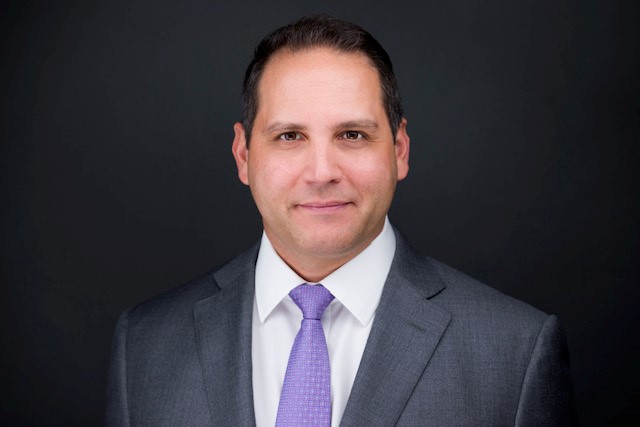 Marino Demonte is Vice President, Northern Commercial Surety, at Skyward Specialty. He joined the company in April 2023 and brings 25 years of commercial surety underwriting experience. In his current role, he collaborates with regional leaders and underwriting teams across three regions to underwrite surety risks and expand Skyward’s surety portfolio. He also oversees management of Skyward’s customs bond program. He can be reached at mdemonte@skywardinsurance.com.
 Carol Levine is Owner and President of Arthur B. Levine Co., Inc., a commercial surety bond agency in NY that primarily focuses on court bonds, probate, guardianships, and trusts, and is Partner in the strategic alliance with Adams-Levine Surety Bond & Insurance Solutions, which specializes in bank depository bonds and bankruptcy trustee bonds. Carol is also Co-founder and President of Women in Surety. She can be reached at clevine@levinecompany.com or at 212.986.7470.
Get Important Surety Industry News & Info
Keep up with the latest industry news and NASBP programs, events, and activities by subscribing to NASBP SmartBrief.