Government Construction Contractor Pays $2.5 Million to Settle False Claims Act Allegations
On April 20, 2021, the Department of Justice (DOJ) issued a press release, “Construction Firm Pays $2.5 Million to Settle Allegations of Exploiting Service-Disabled Veteran-Owned Small Business Program.” This is just one of the latest in an increasingly long line of False Claims Act (FCA) settlements involving government construction contractors (among other industries).
Since its original enactment in 1863, the FCA has seen several revisions; and it has become an increasingly powerful enforcement tool. It was written broadly to encompass all kinds of fraud against federal programs and contracts, and it has been interpreted similarly broadly. In fact, in the past several years, the DOJ has been targeting agencies, bond producers, and sureties, for bonding contractors that: demanded payment from the government for materials that did not conform to the contractual requirements; falsely certified to the government that they qualified for service-disabled, veteran-owned small business (or other small business entities) government contracts; and other contractor violations of the FCA.
Indeed, the FCA is the federal government’s main fraud-fighting mechanism, which empowers whistleblowers to sue on the government’s behalf over fraud in government contracts and programs. This case does not appear to involve a whistleblower, but individuals (often disgruntled current or former employees) are rewarded generously for acting as private attorneys general, collecting between 15% and 30% of the government’s recovery through a favorable judgment or settlement. It is a significant incentive for a whistleblower to file such a lawsuit, possibly to recover, say, 15-30% of $2.5 million.
The Department of Justice press release in this matter was issued out of the U.S. Attorney’s Office in the Central District of California. Stronghold Engineering, Inc. (SEI) and its owners paid the United States $2.5 million to resolve civil and criminal investigations into allegations that the firm violated the False Claims Act through its fraudulent involvement in federal construction contracts intended for service-disabled, veteran-owned small businesses (SDVOSBs). In addition, SEI entered into a non-prosecution agreement (NPA) with the U.S. and agreed to maintain an ethics and compliance program for the two-year period of the agreement. It should be noted that the press release provides that “[t]he claims resolved by the civil settlement are allegations only and there has been no determination of liability.”
The facts of the matter are as follows. SEI, owned by a husband and wife team, is a construction company that at one time qualified as disadvantaged small business in the Small Business Administration’s (SBA) 8(a) program; but the company left the program in 2004.
The contracts at issue in the investigation were awarded to Kadena Pacific (KPI), a now-defunct construction company, which was majority owned by the wife’s father, who was a service-disabled veteran.
The civil settlement and NPA resolved allegations that, from August 2007 to October 2013, KPI certified to the U.S. Department of Veterans Affairs (VA) that it qualified for SDVOSB government set-aside and sole source contracts. KPI received and submitted invoices for 14 SDVOSB contracts from the VA, even though it was ineligible for SDVOSB status because the service-disabled veteran did not control KPI on a day-to-day basis. SEI was closely affiliated with KPI, with an SEI executive handling the day-to-day management of KPI. Furthermore, SEI employees worked on SDVOSB contracts awarded to KPI. KPI was dissolved in September 2019.
This press release does not mention involvement of a surety or an agency or a bond producer, but we can be sure that they were involved in obtaining and issuing bonds on behalf of KPI. Whether they have been investigated in relation to the fraud allegations against SEI may never be known. Or a similar press release may issue in the next few months. Such press releases sometimes include allegations against and settlement terms for both a contractor and its surety, and sometimes two separate press releases are issued.
The one thing of which we can be sure is that the federal government has broadened and deepened its FCA scrutiny, and it will not abate any time soon. Indeed, with fraud stories surrounding the Paycheck Protection Program, more investigative and cooperative task forces are being initiated to hold accountable any company or person that commits fraud or abuse in government programs.

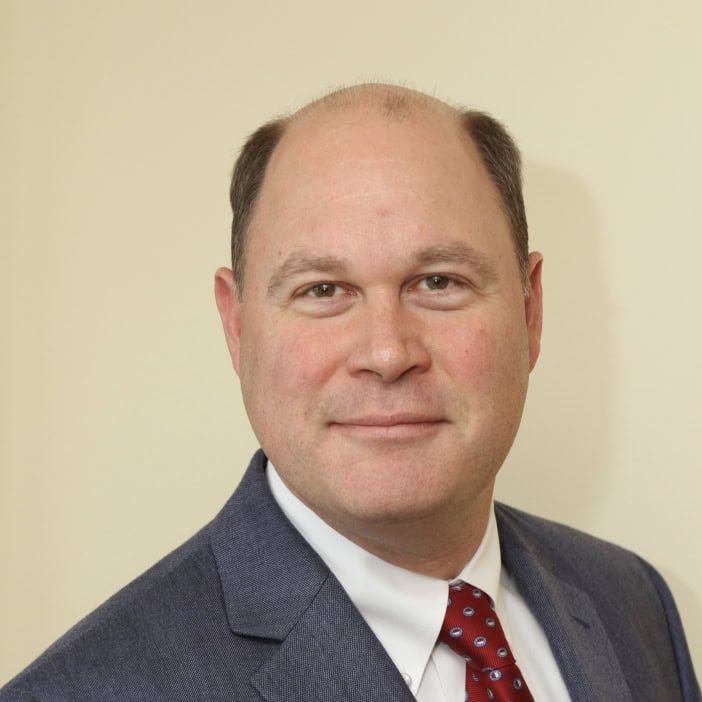
The author of this article is Martha Perkins, General Counsel at NASBP. She can be reached at mperkins@nasbp.org or 240.200.1270.
This article is provided to NASBP members, affiliates, and associates solely for educational and informational purposes. It is not to be considered the rendering of legal advice in specific cases or to create a lawyer-client relationship. Readers are responsible for obtaining legal advice from their own counsels, and should not act upon any information contained in this article without such advice.
Get Important Surety Industry News & Info
Keep up with the latest industry news and NASBP programs, events, and activities by subscribing to NASBP SmartBrief.