The U.S. Department of Transportation Bonding Education Program (BEP) is well underway this year with twelve of fourteen BEPs scheduled for 2012. NASBP is a participant for a second year in a row in the effort, a partnership between the Surety and Fidelity Association of America and DOT’s Office of Small and Disadvantaged Business Utilization (OSDBU) that is designed to help small businesses become bond-ready and better able to compete for transportation contracts.
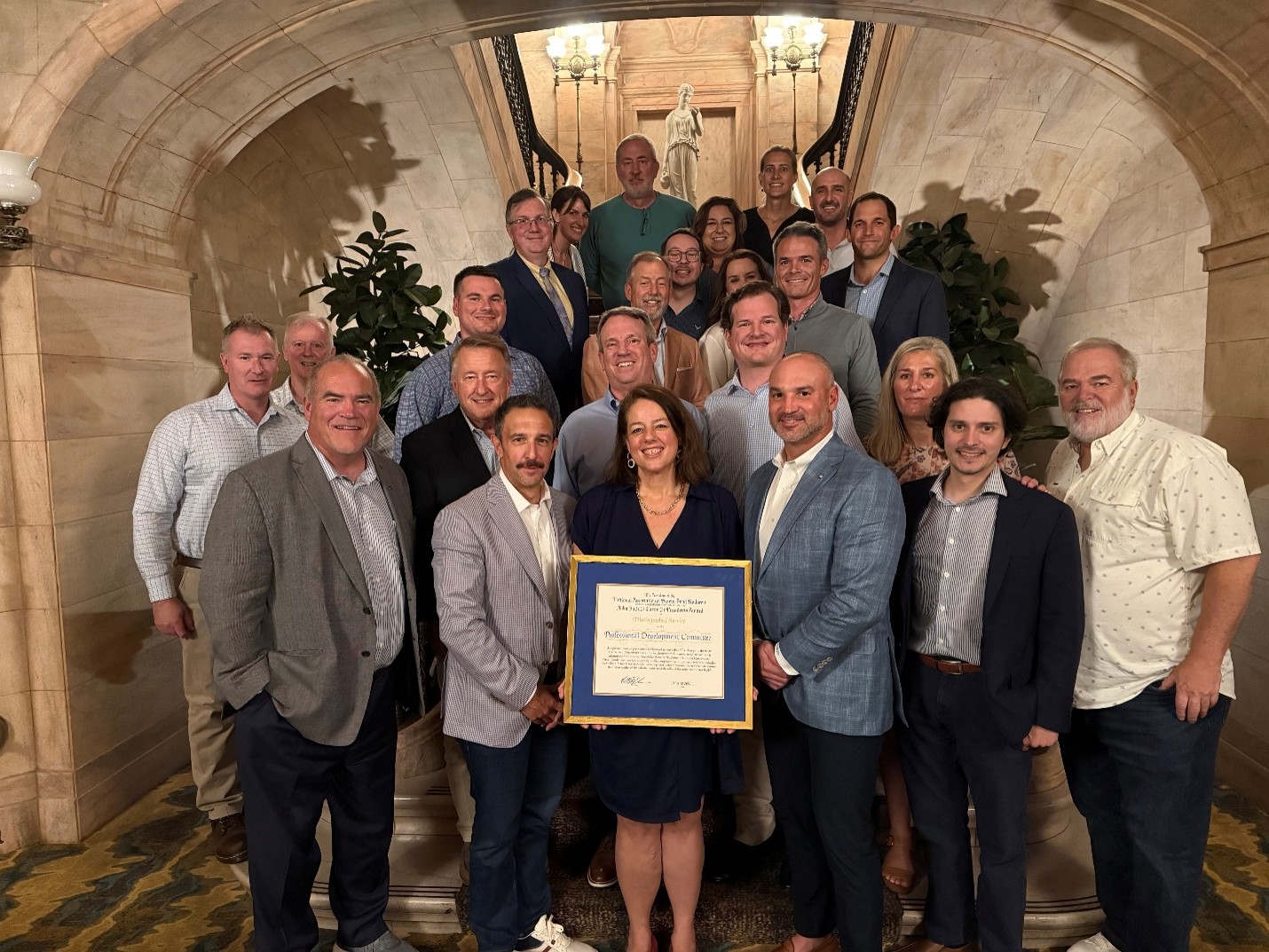
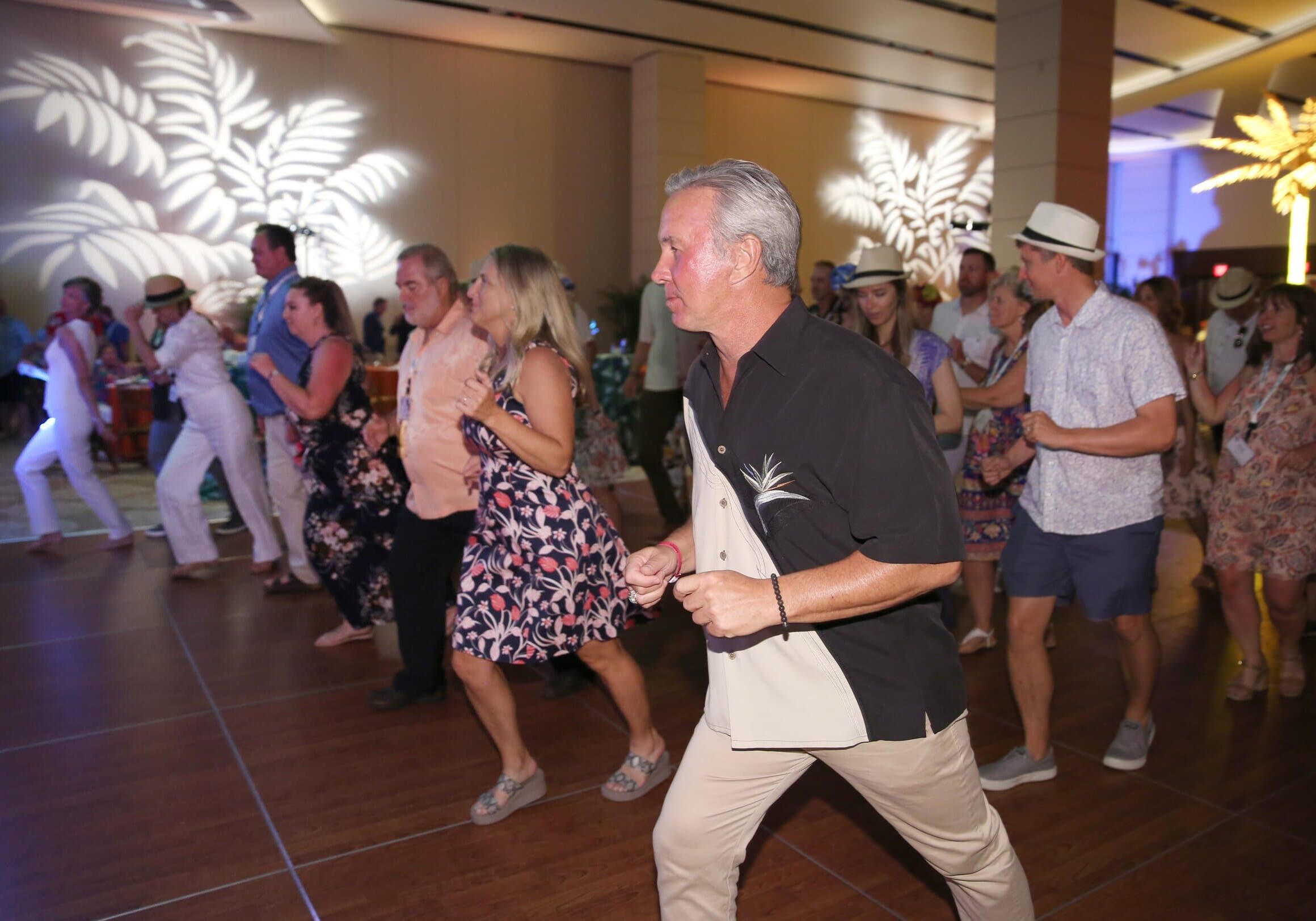
NASBP producers and affiliates who participated in the recently completed Chicago BEP Workshops described several rewards they discovered by participating in this kind of outreach to small, emerging business owners. The pictures below are provided with the permission and courtesy of the U.S. DOT.
Benefits of Participating as a Surety Professional
“As the Nike ad says, ‘Just Do It,’ you will find it is a very rewarding experience and one that will be a good use of your valuable time for a whole bunch of feel-good reasons,” said NASBP First Vice President Carl Dohn, who is also President of Dohn & Maher Associates in Palatine, IL. “From a practical stand point, you can develop some new business contacts, it is easily a win-win proposition,” he added.
Typically, the BEP consists of an educational workshop component and a bond readiness component. The educational workshops include a curriculum designed to help small businesses improve their operations in order to become bonded or to increase their bonding capacity. The bond readiness component consists of one-on-one meetings with local surety representatives to assemble materials necessary to complete the bond process.
NASBP Producer William P. Maher, Vice President of Dohn & Maher Associates, said, “I find it very challenging and rewarding to meet face to face with contractors and explain to them the risk rewards of owning their own business and optimizing their bonding capacity.”
“I’d encourage [other NASBP members, affiliates and associates] to participate,” said NASBP Affiliate Jim Fagan, Account Executive of Bond & Financial Products for Construction Services for Travelers Surety in Naperville, IL. “Sharing their surety knowledge and helping some emerging contractors get on the right path of building a business and a surety program ‘the right way’ only helps to benefit our industry as a whole,” he said.
NASBP Immediate Past President J. Spencer Miller, who is the Managing Partner of Schwartz Brothers Insurance in Chicago, said, “Assisting companies and people in improving their situations in life can be very rewarding. Both producers and underwriters should participate, it provides a fresh perspective of the construction world and can keep you involved in your local marketplace.”
Topics Addressed With Small, Emerging Owners
Director Roberto Escalante of the U.S. DOT Small Business Transportation Resource Center for the Great Lakes Region at the Illinois Hispanic Chamber of Commerce in Chicago said the participation of the surety bond producers and surety company representatives provide industry perspective and experience.
“The producers added substantial value as subject matter experts and gave their viewpoints during many of the workshops in how to properly fill in key parts of the contractor questionnaire and what underwriters look for in the application process,” said Escalante. As a result, “the owner participants in the program gained great insight into the bonding industry, for example how they can obtain access to working capital and the importance of developing a business plan as a long-term growth plan for their businesses,” he said.
NASBP Producer Jim Sulkowski, Executive Vice President of DS&P Insurance Services, Inc., in Palatine, IL, conducted the first Chicago BEP seminar during which he addressed the proper completion and understanding of the contractor questionnaire. Sulkowski said that approximately 13 contractors and several federal/local DOT personnel attended that day. ”Participants asked several questions about the surety relationship which were responded to by myself and the other NASBP participants in the room,” he said, adding, “Overall it went very well.”
NASBP Producer John Naso, Vice President of Horton Surety Services of The Horton Group, Inc. in Orland Park, IL, said the small business owner he advised had been in business since 1978. This owner “had a good quality review financial presentation, but they had no working capital or equity, so we spent a good deal of time discussing this, and why it’s important in order to qualify for surety credit,” Naso said. This owner was well suited for an Express Program for which Naso provided an application. “We did discuss in detail what areas they would need to improve on in order to qualify for traditional surety credit outside the Express Programs. They seemed very eager to learn and had very good questions,” he added.
Miller said, “The Chicago agents and underwriters did an excellent job of being professionals in our field, well informed and communicative.”
Producer Advice to Producers Considering Participating
“My advice to surety professionals is to educate the client,” said Maher. “Make sure they know what risk is involved personally and corporately with bonding. If they want to take that risk, your job is to get them a program that allows them to maximize their capacity while establishing parameters.” “Think outside the box and find a way to get things done if the Character is there,” he said.
“Emphasize the rewards that they will receive if they address risk correctly,” Maher said. “These small business owners need to have a full understanding of risk, specifically indemnity, job costing, as well as the perils of growing their business too fast.”
Several NASBP producers underscored that small, emerging business owners must understand that this is a relationship business. Maher said, “I try to surround them with professionals that know the business and that can help them with accounting, legal issues, job costing, etc.”
Fagan, who participated in a seminar that addressed what surety bonds are and how to begin the process of obtaining a bond, said he emphasized the importance of communication amongst all parties. “I made a point to encourage participants to partner up with knowledgeable surety professionals, from bankers to CPA’s to surety agents and surety providers.”
Miller said he explained that the owner should plan to communicate both positive and negative aspects of their business to the surety parties. “It is best to be upfront and open about everything,” he said.
Dohn said he encouraged the owner he met with to remain positive and not become discouraged. “I explained that the process of getting set up for surety credit can seem overwhelming unless you look at it as a series of small steps. Once the basic information is assembled, it is just a matter of updating various pieces. Eventually, they will have a current package to present to a surety company.”
“This is a process, that even bad prior situations can be looked at as positives given the right circumstances and explanation,” added Miller. Dohn said he also explained the importance of the three C’s of surety credit, stressing Character and reviewing how the other two C’s, Capital and Capacity, were equally important to qualify for the extension of surety credit.
NASBP Producer Steve Pohl of DS&P Insurance Services, Inc. in Palatine, IL said he suggests how these small, emerging business owners can grow their company. “I advise them to build their company’s balance sheet by retaining profits and not to focus too heavily on minimizing taxes.”
Fagan said he also stressed solid internal controls and financial reporting.
Escalante added that not only the owner but other key employees from these businesses would benefit from attending the BEP. He said he believes that it is important that these owner participants consider bringing “either their operation manager and/or key administrative person, as they are the ones that play a big part in collecting and inputting the key [financial] information.”
Conclusion
Naso said he participated in last year’s and this year’s BEP held in Chicago and felt that the DOT did a good job in identifying qualified candidates to participate. “The candidates seemed to be closer to qualifying for surety credit,” he said.
“The work done in pre-qualifying the owner participants by Roberto Escalante of the Illinois Hispanic Chamber of Commerce made a huge difference in the quality of prospects we met with in the sessions,” Dohn said. “The owners were very interested in improving their companies and as a result, in general, were very receptive to suggestions on the steps needed to advance the position of their companies in obtaining surety credit.”
Not all BEPs hold four Workshops. Some schedule more based on the discussions held at the planning or Stakeholder meeting. Escalante said that the Chicago BEP presenters and participants modified the Chicago BEP schedule. “We shortened the number of weeks from six to four weeks. We had a total of nine workshops and a short presentation from a bonded DBE in this time-frame, and I felt it did increase participation, as we are always considerate of our clients’ time.”
“Keeping the duration of the program to four weeks by doubling up the workshop information–covering two sessions’ worth of information in one afternoon–seemed to work well and I would suggest it be considered at other DOT BEPs in other locations,” Dohn added.
Escalante said, “The workshops are just one part of this program. The bigger piece comes after the workshops have been completed–working with our graduates to assist them in completing bonding applications.”
NASBP members and affiliates see the value in participating and feel that participation is one way to give back. “Do your part to promote our industry and to help educate emerging contractors to take the mystery out of the surety prequalification process,” Pohl said.
Fagan concluded, “I enjoyed the experience and look forward to volunteering for future events.”
The remaining 2012 BEPs will be held in Columbia, South Carolina; Kansas City, Missouri; both Birmingham and Montgomery, Alabama; Louisville, Kentucky; Oakland, California; Salt Lake City, Utah; Oklahoma City, Oklahoma; Albany, New York; Philadelphia, Pennsylvania; Denver, Colorado; Portland, Oregon; and Norfolk, Virginia.
If you have an interest in learning more about participating as a producer in one of the U.S. DOT BEPs, visit NASBP.org under “Events” and “US DOT Bonding Education Program.” The site provides details about what information producers typically review with these small, emerging business owners as well as forms that are provided to help them assemble their financial documentation for surety credit. Contact the nearest U.S. DOT local representative listed in the BEP “Schedule” to let the local DOT representative know of your interest.
Also, let Larry LeClair, staff liaison to the NASBP Small and Emerging Business Committee, know of your interest. LeClair can be reached at lleclair@nasbp.org.
|
|
| During the Chicago BEP, NASBP Producer Jim Sulkowski presented a seminar on the proper completion of the contractor questionnaire. |
|
|
| Senior Advisor Edward Cafiero of the U.S. DOT OSDBU welcomed participants and surety professionals when the Chicago BEP launched in January. |
|
|
| Small, emerging business owners attending the Chicago BEP. |


Get Important Surety Industry News & Info
Keep up with the latest industry news and NASBP programs, events, and activities by subscribing to NASBP SmartBrief.