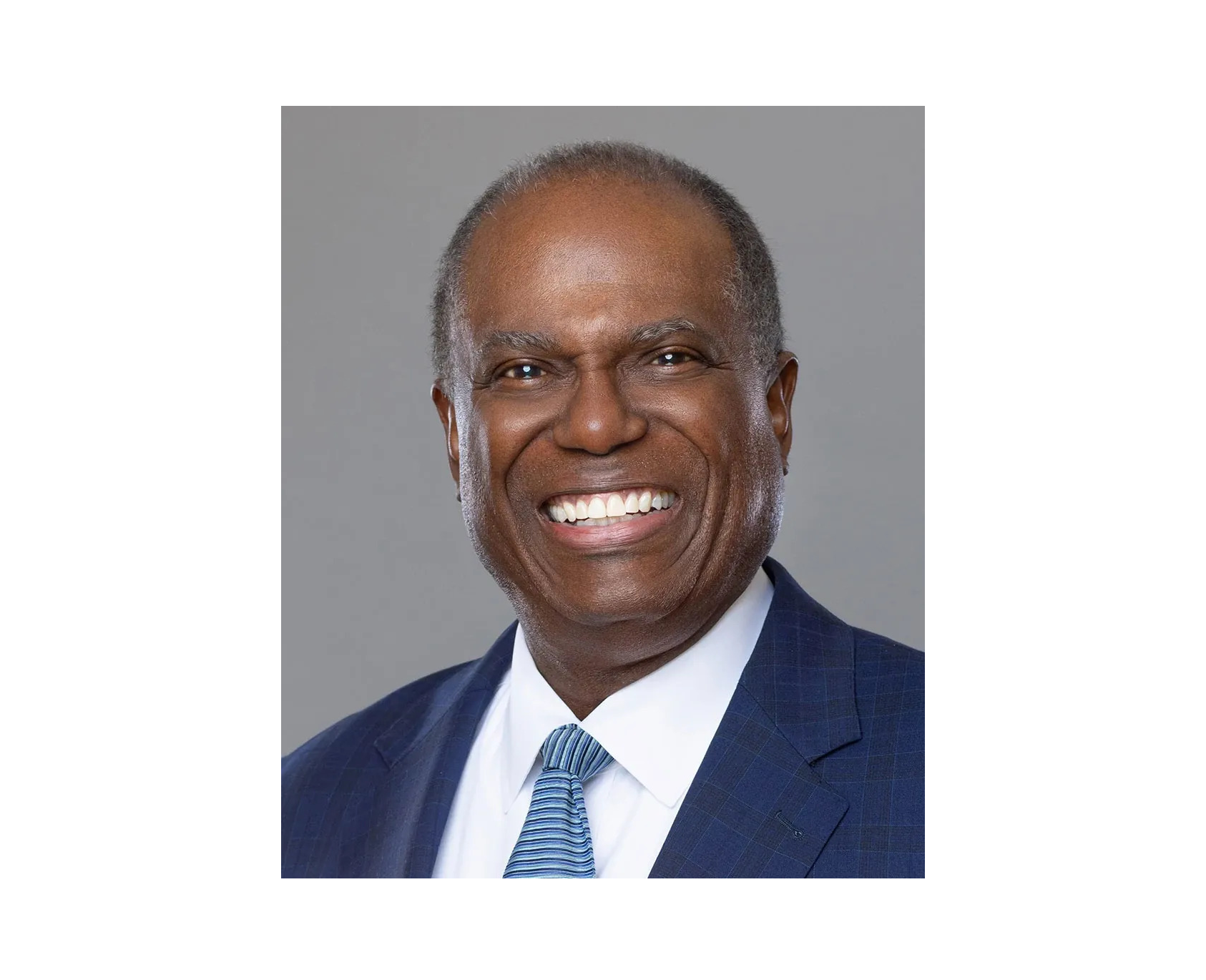

By Joseph Haughney of Smith Currie Oles LLP
Originally published November 21, 2025
Now that Congress has passed a budget ending the government shutdown, contractors are left wondering how and when they will be compensated for costs incurred due to the government shutdown. This post explores how government contractors can recover not only the cost of work performed during the government shutdown, but also additional costs arising specifically from the shutdown. This post further expands upon Smith Currie Oles’ October 3, 2025, article, “Government Shutdown Puts New Burdens on Contractors.” In order to get paid for impacts, contractors must understand:
- Shutdown Basics and Delayed Payment;
- Partially Funded Contracts;
- Costs Reimbursable for Government Shutdowns; and
- Steps to Take for Recovery
Contractors must determine whether they can submit a request for equitable adjustment (REA) or Contract Disputes Act (CDA) claim to the contracting officer. Importantly, contractors need to know which Federal Acquisition Regulation clauses to cite to in such requests.
Shutdown Basics and Delayed Payment
Article I, Section 9 of the United States Constitution provides that “No Money shall be drawn from the Treasury, but in Consequence of Appropriations made by Law.” In furtherance of Article I, Congress has passed the Antideficiency Act, a series of statutes that prevent federal officials from obligating funds in excess of what Congress has appropriated.1
Thus, both houses of Congress must convene annually and appropriate a budget for the upcoming year, and then obtain presidential approval. This means that Congress already appropriated funds for most current contracts in 2024. When Congress and the President disagree, the government closes.
For purposes of payment during the shutdown and in its immediate aftermath, it is important to distinguish fully and partially appropriated contracts. If Congress has fully appropriated or funded a contract, that allows a contractor to be paid for performance during a government shutdown. Fully appropriated contracts may remain (in theory) uninterrupted during a shutdown.
However, in practice, this is not often the case. Although certain federal officials are “excepted,” “exempt,” or “emergency,” many more are furloughed during a government shutdown, and even if a contract is fully appropriated and the contractor requests payment, there may be no federal employees present to process that payment. While a contractor under a fully appropriated contract may be eligible to receive payment during a shutdown, it may not occur until afterward.
Partially Funded Contracts
Contractors under partially funded contracts may not have any ability to recover during the shutdown at all, and may be contractually required to perform without reimbursement until the shutdown ends and further appropriations have been allocated. This in essence requires a contractor under a partially appropriated contract to finance the project on behalf of the government during a shutdown.
Whether a contract is fully or partially appropriated, contractors may have to float project costs during a shutdown and recover them after the government reopens, and contractors should expect delayed payment even when the government reopens.
Costs Reimbursable for Government Shutdowns
By now, contractors should know whether they were required to perform under contract during the government shutdown. Most contractors were either required to continue performing during the government shutdown or were instructed to stop or suspend work by an agency or contracting officer either directly or constructively.
It is important to note that government contractors are required to mitigate their damages, and thus if a contracting officer or other authorized agency official issued a stop work order, the contractor is responsible for mitigating costs to the degree possible by reassigning personnel, returning rental equipment, or otherwise reducing costs.
Costs may vary in amount and variety depending on whether contractors were required to continue work or issued a stop work order. Shutdown costs generally include demobilization and remobilization efforts, home office overhead, ongoing facility and equipment costs, and labor costs.
For example, a contractor that was required to continue working without payment during the shutdown may incur loan fees and incur significant costs for borrowing money to pay its employees; whereas a similarly situated contractor subject to a stop work order may instead incur additional overhead during the shutdown, and remobilization costs after the shutdown ends. Look at your contract’s stop work or suspension of work clause (if applicable).
Steps to Take for Recovery REA or CDA Claim
When the government reopens, based on the shutdown, it will receive numerous REAs under FAR clauses that have an equitable adjustment as a remedy or Contract Disputes Act (CDA) claims for breach costs resulting from failure of the government to comply with a clause that does not include an equitable adjustment as a remedy. Here is what contractors can do to put themselves in the best position to recover for shutdown related costs.
- Document Everything. Maintain contemporaneous records of all communications, directives, and cost impacts. While the shutdown may be over, it is likely not too late to track all costs incurred during the shutdown. Tracking these costs will ensure that any request for equitable adjustment includes all costs incurred during that period.
- Track Costs Separately. Track costs arising from the shutdown under a separate cost code to ensure that shutdown costs are isolated from other business expenses.
- Mitigate Damages. Reassign employees where possible, return unused rental equipment, cancel travel, and document steps to reduce costs.
- Comply with Notice Deadlines. The government shutdown does not toll contractual or statutory deadlines. Existing dispute and claim deadlines do not change just because the contracting officer is furloughed. Depending on which clauses are included in a particular contract, REAs may be due within 20 or 30 days of reopening.
In addition, the FAR provisions below may support your additional costs and delay.
While the government shutdown impacted almost every contract, each contract is different. Review your contract and any agency direction before determining the best path forward for your circumstances. However, here are some FAR provisions that are applicable to most contracts in light of the shutdown depending on the type of contract, i.e., firm fixed price, cost reimbursement, etc.:
- FAR 52.242-14, Suspension of Work
- FAR 52.242-15, Stop Work Order
- FAR 52.242-17, Government Delay of Work
- FAR 52.243-1, Changes – Fixed Price
- FAR 52.243-2, Changes – Cost Reimbursement
- FAR 52.243-3, Changes – Time & Materials or Labor-Hours
- FAR 52.243-4, Changes
- FAR 52.232-20, Limitation of Costs
- FAR 52.232-22, Limitation of Funds
Please note that there are of course constructive changes and constructive suspensions or even “breaches” of clauses that do not include an equitable adjustment remedy.
Conclusion
While it may be a relief that the shutdown is over, the complex process of recovery is just beginning. Recovery will hinge on documenting all costs during the shutdown, isolating project versus shutdown-specific costs, demonstrating reasonable mitigation of costs, and understanding the applicable contract provisions and timely submitting costs for reimbursement through an REA or a CDA claim. Whether work continued without payment or stopped altogether, contractors that prepare now will be in the best position to recover their costs as the government reopens.
 Joseph Haughney is an attorney with Smith Currie Oles. He works with clients in the firm’s construction, government contracts, business and real estate, and commercial litigation groups. Haughney assists clients with a variety of issues, including in-depth legal research and fact analysis, drafting motions, reviewing contracts, and drafting discovery requests and responses. He can be reached at jmhaughney@smithcurrie.com or 206.467.5626.
End Notes
1 Violation of the Antideficiency Act may result in fines, suspension or removal, and even criminal penalties. While this may seem severe, these punishments prevent contracting officers or other agency officials from overspending appropriated funds, incurring new obligations, and then demanding that Congress cover the costs of those newly incurred obligations.
Get Important Surety Industry News & Info
Keep up with the latest industry news and NASBP programs, events, and activities by subscribing to NASBP SmartBrief.