

By Eric Gaus of Dodge Construction Network
The headline Producer Price Index signaled a tight squeeze for contractors. Surety and bond professionals should pay attention because the distance between what contractors pay for the materials and fuel that go into a job, and what contractors are able to charge for the finished work stayed wide in August. Given the re-escalation of the conflict with Iran, oil prices will put pressure on inputs and eventually contractors will need to raise prices.
Prices for the goods flowing into job sites are up 11.5 percent over the past year. The price of finished construction is up 5.3 percent. In August the gap widened rather than closed: diesel jumped more than 24 percent in a single month, and the price of construction did not move at all. Contractors absorbed the difference. That is a margin story before it is a price story, and margin is what surety underwrites. Fixed-price backlog bid in the spring carries fuel and material assumptions that the summer has since invalidated, and until a change order or an escalation clause moves that difference, the contractor is the one carrying it.
The pressure is not evenly distributed across a book. Heavy civil, paving, excavation, and any scope with long haul distances sit closest to the fuel move. Structural steel fabricators and erectors have absorbed months of steady increases without a single month of real relief. Electrical and mechanical subcontractors carry the copper and nonferrous exposure, which remains among the steepest in the release. Wood-framed residential and light commercial work has had a comparatively calm year, and equipment prices have stayed remarkably contained, which means the strain is concentrated in consumables and raw material rather than in capital plant.
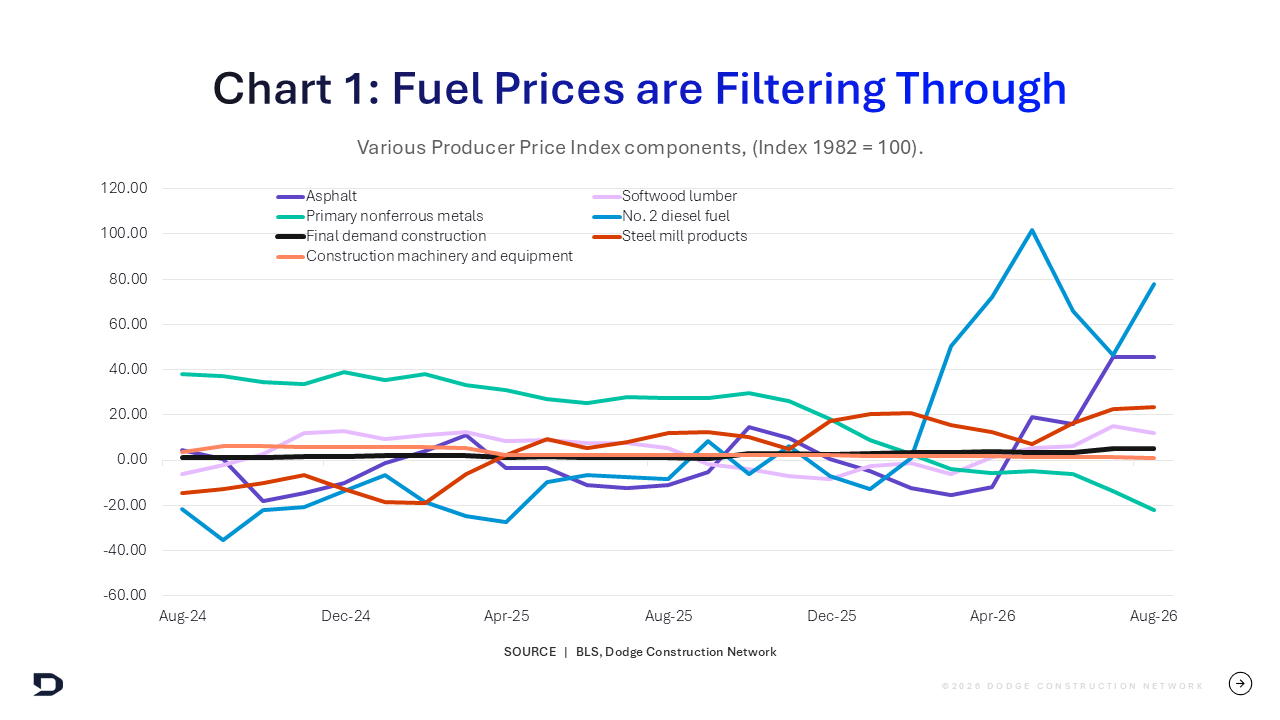
What this means in practice: the accounts worth a closer look this quarter are those combining a long fixed-price backlog, thin working capital, and a trade mix weighted toward fuel or metals. Ask what fuel and material assumptions sit inside jobs bid before midsummer, whether those contracts carry escalation or price adjustment language, and how estimated cost to complete has moved since the last work in progress review. Fade in gross profit on older jobs is the early symptom, and it tends to appear in the schedule before it appears in the conversation.
What matters for underwriting is not whether one month persists but whether the gap between input costs and construction prices keeps holding open. It has for most of the year, and we expect it to remain until contractors are forced to raise their rates.

Eric Gaus is Chief Economist at Dodge Construction Network, where he directs economic research. He brings over 15 years of experience in academia and the private sector, creating macroeconomic models and producing research on critical issues for the global economy. Prior to joining Dodge, Gaus was a Director at Moody’s, where he managed the development and maintenance of their global forecasting model and served as the product manager of their country risk service. He received his PhD from the University of Oregon and spent several years teaching at small liberal arts colleges. While in academia, Gaus published articles on the role of expectation formation in macroeconomics and finance. He can be reached at Eric.Gaus@construction.com.
Get Important Surety Industry News & Info
Keep up with the latest industry news and NASBP programs, events, and activities by subscribing to NASBP SmartBrief.